
What is Hoarding Disorder? Causes, Symptoms & Professional Cleanup Help
Learn what hoarding disorder is, its causes, symptoms, health risks, and how professional hoarding cleanup services can help restore safe living conditions.
What is Hoarding Disorder
hoarding cleanup services, hoarding disorder symptoms, extreme cleaning services, help with hoarding cleanup, depression cleani
What is Hoarding Disorder?
Hoarding disorder is a mental health condition in which a person has persistent difficulty discarding or parting with possessions, regardless of their actual value. Individuals with hoarding disorder feel a strong need to save items and experience distress when trying to throw them away.
Over time, this behavior leads to excessive clutter that fills living spaces, making rooms unusable and creating unsafe living conditions. Hoarding disorder can affect people of all ages and backgrounds, and it often worsens gradually over time.
This condition is recognized by mental health professionals as a serious psychological disorder that can impact a person’s emotional well-being, relationships, and overall quality of life. In severe cases, hoarding can create fire hazards, health risks, and structural damage within homes.
Many people struggling with hoarding disorder feel overwhelmed and embarrassed, which often prevents them from seeking help. However, understanding the disorder and knowing the available treatment options can help individuals regain control of their living spaces and improve their mental health.
Common Signs and Symptoms of Hoarding Disorder
Hoarding disorder can present itself in different ways, but there are several common symptoms that indicate someone may be struggling with this condition.
1. Excessive Clutter
One of the most noticeable signs is large amounts of clutter accumulating throughout the home. Items such as newspapers, clothes, boxes, broken electronics, and even trash may pile up in living areas.
2. Difficulty Discarding Items
People with hoarding disorder often feel extreme anxiety when trying to throw things away. Even items that appear useless or broken may feel emotionally important to them.
3. Strong Emotional Attachment to Objects
Hoarders may attach sentimental value to everyday items. They may believe these possessions could be useful in the future or represent important memories.
4. Disorganized Living Spaces
Rooms may become so full of items that they cannot be used for their intended purpose. For example, kitchens may become unusable for cooking or bedrooms may no longer have space for sleeping.
5. Social Isolation
Because of embarrassment or fear of judgment, many people with hoarding disorder avoid inviting friends or family into their homes.
6. Difficulty Making Decisions
Individuals with hoarding disorder may struggle with decision-making, especially when deciding whether to keep or discard items.
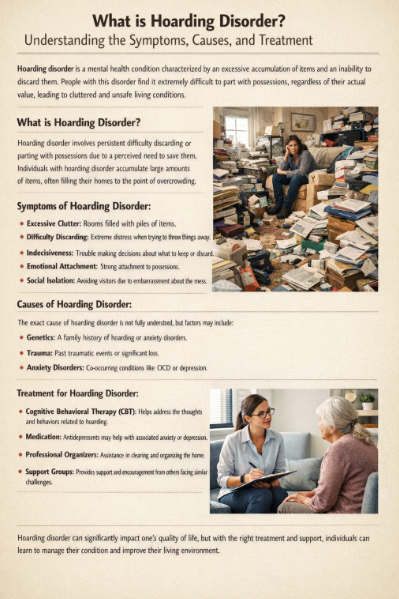
Place this image after the symptoms section to visually demonstrate how hoarding affects living environments.
What Causes Hoarding Disorder?
There is no single cause of hoarding disorder. Instead, experts believe it develops due to a combination of psychological, environmental, and genetic factors.
Mental Health Conditions
Hoarding disorder is often linked with other mental health issues such as:
- Depression
- Anxiety disorders
- Obsessive Compulsive Disorder (OCD)
- Attention deficit disorders
These conditions may make it more difficult for individuals to manage their belongings or cope with emotional stress.
Traumatic Life Events
Experiencing trauma such as the loss of a loved one, divorce, or financial hardship may trigger hoarding behaviors. Collecting items can sometimes feel like a way to regain control during difficult times.
Family History
Research suggests that hoarding tendencies may run in families. Individuals who grow up in cluttered environments may develop similar habits later in life.
Perfectionism and Fear of Waste
Some people struggle with throwing things away because they fear they might need the item in the future or worry about wasting resources.
Health and Safety Risks of Hoarding
Hoarding disorder can create serious health and safety hazards within the home. When clutter accumulates excessively, it can lead to dangerous living conditions.
Fire Hazards
Stacks of paper, cardboard, and other flammable materials increase the risk of house fires and can block emergency exits.
Mold and Pest Infestations
Food waste and clutter provide ideal conditions for pests such as rodents, cockroaches, and insects. This can lead to serious sanitation issues.
Structural Damage
Excessive weight from hoarded items can damage floors and walls in extreme cases.
Increased Risk of Injury
Narrow pathways and unstable piles of items make it easy to trip, fall, or become trapped during emergencies.
Mental Health Effects
Living in cluttered conditions can worsen feelings of anxiety, depression, and stress.
therapy and support for hoarding disorder
Treatment Options for Hoarding Disorder
Although hoarding disorder can be challenging to overcome, several treatment methods can help individuals manage their condition and improve their living environments.
Cognitive Behavioral Therapy (CBT)
Cognitive Behavioral Therapy is one of the most effective treatments for hoarding disorder. This therapy helps individuals understand the thoughts and behaviors that lead to hoarding and develop healthier habits.
Medication
In some cases, doctors may prescribe medications to treat underlying conditions such as anxiety or depression that contribute to hoarding behavior.
Support Groups
Support groups provide individuals with a safe environment where they can share experiences and receive encouragement from others facing similar challenges.
Professional Hoarding Cleanup Services
In severe cases, professional hoarding cleanup services may be necessary to restore safe living conditions. These trained specialists help remove clutter, sanitize living spaces, and organize belongings in a respectful and supportive manner.
Professional cleaners often work alongside mental health professionals to ensure that the cleanup process is handled carefully and compassionately.
How Professional Hoarding Cleanup Services Help
Professional cleanup companies specialize in extreme cleaning and hoarding situations that require more than regular housekeeping.
These services typically include:
- Removing large amounts of clutter
- Sorting and organizing belongings
- Safe disposal of waste
- Deep cleaning and sanitization
- Mold and biohazard removal
- Restoring homes to safe living conditions
For families dealing with hoarding disorder, hiring professionals can significantly reduce stress and speed up the recovery process.
How to Help Someone with Hoarding Disorder
Supporting someone with hoarding disorder requires patience and understanding.
Here are some helpful approaches:
Avoid Judgment
Criticizing or shaming the person can make the situation worse and cause them to withdraw.
Encourage Professional Help
Suggest speaking with therapists or professional organizers who specialize in hoarding behavior.
Start Small
Trying to clean the entire home at once can be overwhelming. Begin with small areas to build progress gradually.
Offer Emotional Support
Understanding that hoarding disorder is a mental health condition can help you approach the situation with empathy.
When to Seek Professional Cleanup Help
You should consider professional hoarding cleanup services if:
- Clutter blocks hallways or exits
- The home has strong odors or mold
- Pests are present
- Rooms are unusable due to clutter
- Health or safety risks are present
Professionals have the tools, training, and experience needed to safely handle these complex situations.
Final Thoughts
Hoarding disorder is more than just collecting too many items—it is a serious mental health condition that can impact every aspect of a person’s life. Understanding the symptoms, causes, and available treatments is the first step toward helping individuals regain control over their living spaces.
With the right support, therapy, and professional hoarding cleanup services, individuals struggling with hoarding disorder can begin the process of recovery and create a healthier, safer home environment.