
Hoarding Cleanup Canada | Hamilton, Ontario
When a home has been affected by hoarding for months or years, mold is one of the most serious and most overlooked health hazards inside it. Piles of clothing, boxes, and paper block airflow, trap moisture against walls and floors, and create the dark, humid conditions mold needs to spread. By the time most families or landlords in Hamilton and the surrounding area call for help, mold has often been growing quietly for a long time.
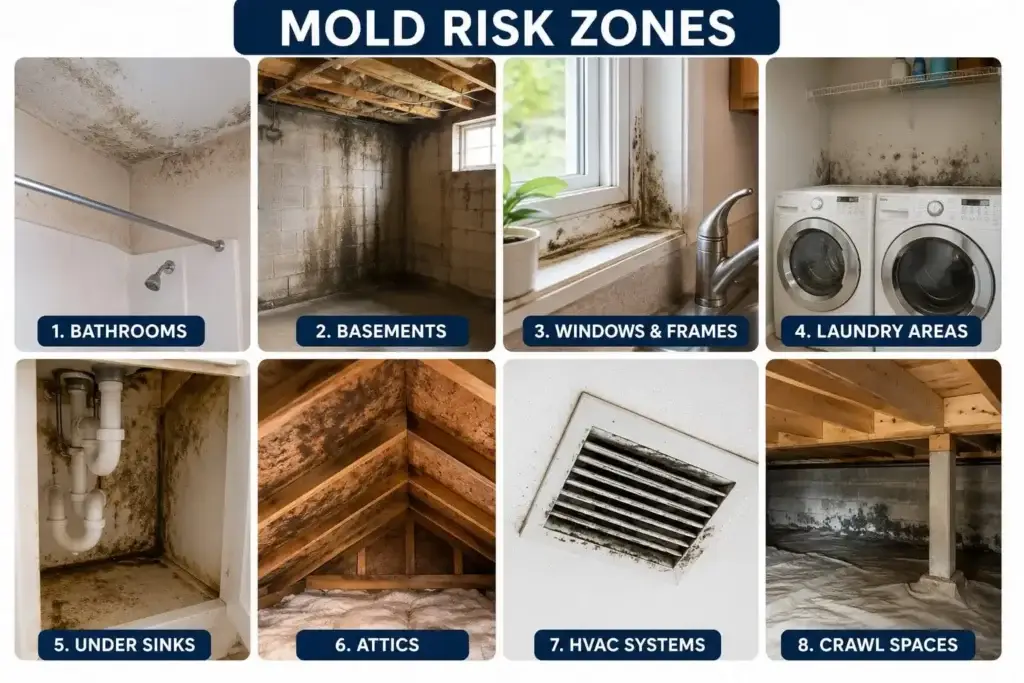
Cluttered, poorly ventilated spaces trap moisture and create ideal conditions for mold growth.
Why Hoarding Environments Are Prone to Mold
Mold needs three things to grow: moisture, organic material, and still air. A hoarded home tends to supply all three at once.
- Stacked belongings block windows, vents, and doorways, so air stops circulating.
- Paper, cardboard, fabric, and wood absorb and hold moisture, becoming food sources for mold spores.
- Leaks, condensation, and spills go unnoticed for long periods when clutter hides the affected surfaces.
- Bathrooms and kitchens buried under items lose ventilation, allowing humidity to build up unchecked.
Health Risks of Mold Exposure
Mold exposure can affect anyone in the home, but the risk is higher for people who have lived in a hoarded environment for an extended time, as well as for older adults, children, and anyone with asthma or a compromised immune system. Common symptoms linked to mold exposure include: Persistent coughing, sneezing, or wheezing
- throat irritation
- Skin rashes or unexplained irritation
- Headaches Eye, nose, and and fatigue that improve when away from the home
- Worsening of existing asthma or allergy symptoms
Some mold species can produce mycotoxins, which have been linked to more serious respiratory and neurological effects with prolonged exposure. Because symptoms can be mistaken for allergies or a cold, mold problems are frequently identified only after a home has been professionally inspected.
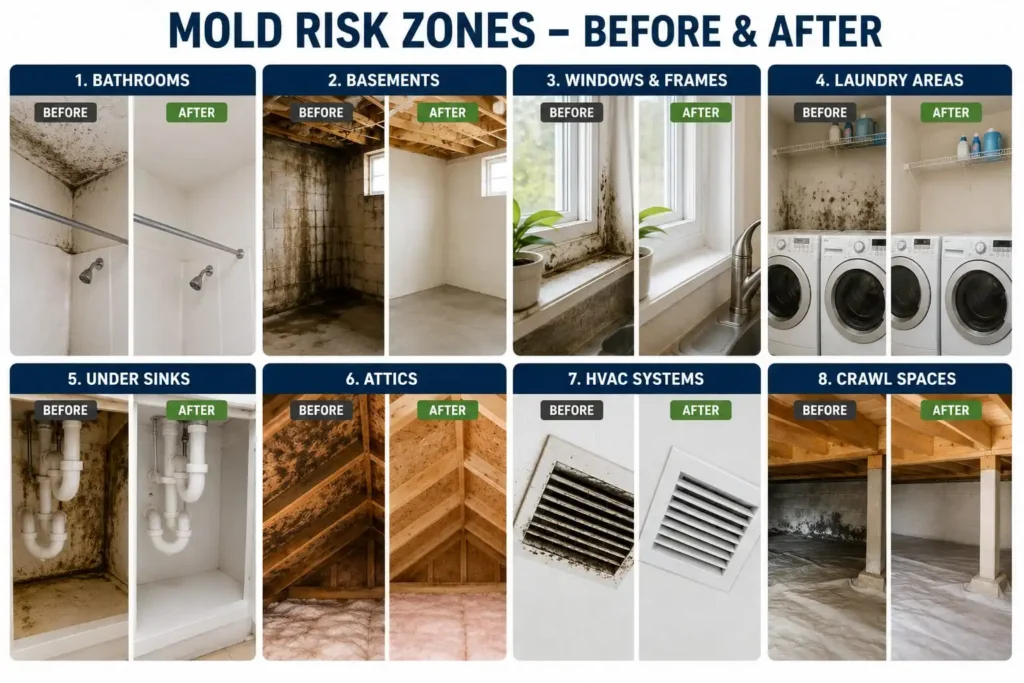
A thorough before-and-after assessment documents the scope of mold damage and remediation progress.
Why Mold in a Hoarded Home Is Different
Standard mold remediation assumes the affected area is accessible. In a hoarding situation, that is rarely true. Technicians first have to safely sort through and remove belongings before the true extent of the mold — on drywall, subflooring, insulation, or structural framing — can even be assessed. This is why mold removal in a hoarded property is a specialized job, not a standard cleaning service. It combines biohazard-level cleaning protocols with the sensitivity required when someone’s personal belongings are involved.
How Professional Remediation Works
- Assessment: identifying visible and hidden mold, including behind walls and under flooring.
- Containment: sealing off affected areas to stop spores from spreading to the rest of the home.
- Safe sorting and removal: separating salvageable belongings from contaminated materials, with care and discretion.
- Remediation: removing and treating mold-affected materials using appropriate equipment and protective procedures.
- Drying and prevention: addressing the moisture source and restoring proper ventilation so mold does not return.
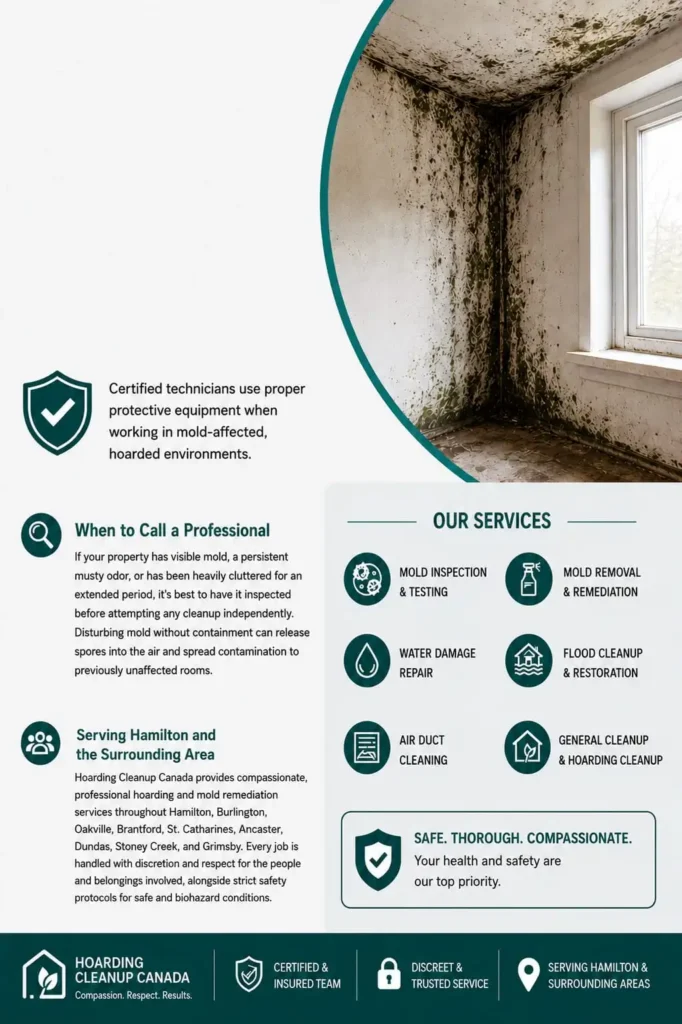
When to Call a Professional
If a property has visible mold, a persistent musty odor, or has been heavily cluttered for an extended period, it’s worth having it inspected before attempting any cleanup independently. Disturbing mold without containment can release spores into the air and spread contamination to previously unaffected rooms.
Serving Hamilton and the Surrounding Area
Hoarding Cleanup Canada provides compassionate, professional hoarding and mold remediation services throughout Hamilton, Burlington, Oakville, Brantford, St. Catharines, Ancaster, Dundas, Stoney Creek, and Grimsby. Every job is handled with discretion and respect for the people and belongings involved, alongside strict safety protocols for mold and biohazard conditions.
If you’re concerned about mold in a hoarded home or property, contact us for a confidential assessment.